
For families living with food allergies, the constant vigilance required to avoid allergenic foods can feel overwhelming. Every meal outside the home, every birthday party, every school event carries the weight of potential danger. But what if there was a way to reduce that fear? What if children with severe food allergies could build tolerance to the very foods that once threatened their lives?
Oral immunotherapy (OIT) represents a paradigm shift in food allergy treatment. Rather than simply avoiding allergenic foods indefinitely, OIT aims to gradually desensitize the immune system, reducing the risk of severe reactions from accidental exposures and, in some cases, allowing patients to consume previously forbidden foods. For Wisconsin families navigating the challenges of food allergies, understanding how OIT works, who might benefit, and what the treatment process entails can help determine whether this emerging therapy is right for their situation.
What OIT Is Designed To Do
Oral immunotherapy doesn’t cure food allergies in the traditional sense, but it fundamentally changes the relationship between a patient’s immune system and allergenic foods. Understanding the goals and mechanisms of OIT helps set appropriate expectations about what this treatment can and cannot accomplish.
Building tolerance
The primary goal of OIT is to increase the threshold amount of an allergen needed to trigger a reaction. Someone who might previously have experienced anaphylaxis from a trace amount of peanut could, after successful OIT, tolerate intentional consumption of several peanuts without severe symptoms. This increased tolerance dramatically reduces the danger posed by accidental exposures—the restaurant meal prepared on shared equipment, the cookie that contained unlabeled tree nuts, or the cross-contaminated snack at school.
For many families, the goal isn’t necessarily to eat allergenic foods freely and regularly, but rather to create a safety buffer that protects against the inevitable slip-ups that occur despite careful vigilance. This “bite-proof” level of protection means that a small, accidental exposure—licking a frosting that contained milk protein, or eating a cookie that was cross-contaminated with peanut—won’t result in emergency room visits or life-threatening reactions.
Some patients undergoing OIT do eventually incorporate the allergenic food into their regular diet, eating it freely without restriction. However, this isn’t the primary measure of success. Even patients who choose to continue avoiding the allergenic food after treatment benefit enormously from reduced anxiety and increased margin of safety in their daily lives.
The psychological impact of increased tolerance extends beyond just the patient. Parents of food-allergic children often describe constant, exhausting hypervigilance. Every ingredient label, every restaurant meal, every playdate requires intense scrutiny and carries the fear that despite their best efforts, their child might be exposed. Our comprehensive food allergy treatment approach can significantly reduce this anxiety burden, allowing families to approach eating situations with less fear and more confidence.
It’s important to understand that OIT creates desensitization rather than true tolerance in most cases. Desensitization requires ongoing exposure to the allergen—patients typically need to consume the allergenic food regularly (daily or several times weekly) to maintain their protection. If they stop consuming the food for extended periods, desensitization may fade, and they could become reactive again.
Desensitization science
The science behind OIT involves gradually retraining the immune system’s response to specific food proteins. In people with IgE-mediated food allergies, the immune system has incorrectly identified certain food proteins as dangerous threats. When these individuals consume the allergenic food, their immune system launches an aggressive defensive response, releasing histamine and other chemicals that cause allergic symptoms.
OIT works by introducing tiny amounts of the allergenic food—far below the amount that would trigger a reaction—and slowly increasing the dose over time. This gradual exposure appears to shift the immune response away from the aggressive IgE-mediated pathway toward a more tolerant response involving different types of immune cells and antibodies.
During OIT, the body begins producing IgG4 antibodies specific to the food allergen. Unlike IgE antibodies that trigger allergic reactions, IgG4 antibodies are thought to have a protective, blocking effect. They can bind to food proteins before IgE antibodies do, preventing the cascade of events that leads to allergic symptoms. Over time, the ratio of IgG4 to IgE increases, contributing to greater tolerance.
Changes also occur in regulatory T cells (Tregs), specialized immune cells that help maintain immune system balance and prevent overreactions. Research published by the National Institutes of Health shows that OIT appears to increase food-specific Tregs, which help calm the immune response to the allergen and promote tolerance. Additionally, mast cells and basophils—the immune cells that release histamine during allergic reactions—become less reactive over the course of treatment.
The exact mechanisms underlying successful OIT are still being researched, and individual responses vary considerably. Some patients achieve robust desensitization relatively quickly, while others progress more slowly or reach a plateau below full desensitization. Understanding these individual differences is part of why [OIT requires close medical supervision](internal-link: /about/dr-ringwala) and individualized treatment planning.
Research continues into ways to optimize OIT protocols, potentially combining oral immunotherapy with other approaches like probiotic supplementation, anti-IgE medications, or modifications to treatment schedules. Wisconsin families participating in OIT are benefiting from years of accumulated research and clinical experience that have refined protocols to maximize safety and efficacy.
Who Qualifies for OIT
Not every patient with food allergies is an appropriate candidate for oral immunotherapy. Board-certified allergists carefully evaluate multiple factors when determining whether OIT is suitable and likely to benefit a specific individual.
Age groups
OIT has been studied and implemented most extensively in children, typically starting around age 4-5 years. This age range represents a balance between being old enough to cooperate with daily dosing and follow safety instructions, while still being young enough to potentially benefit from years of reduced allergy burden. Many Wisconsin allergy practices focus their paediatric OIT programs primarily on this age range for these reasons.
The lower age limit reflects practical considerations. Younger children may have difficulty reliably swallowing doses, might not communicate symptoms clearly, and could struggle to follow restrictions like avoiding exercise or hot showers after dosing. However, some practices work with younger children when circumstances warrant and families can ensure careful supervision.
Adolescents and teenagers can certainly undergo OIT and often do well with the protocol. Their ability to understand the treatment rationale, recognize symptoms early, and take responsibility for daily dosing can be advantageous. However, compliance with daily dosing and activity restrictions sometimes becomes challenging during the busy teenage years, when sports, social activities, and increasing independence compete for attention.
Adults with food allergies are increasingly seeking OIT, though less clinical research has focused on adult outcomes compared to pediatric populations. Adults can be excellent candidates—they’re highly motivated, understand the risks and benefits, and can reliably follow protocols. However, adults who have maintained strict avoidance for decades may need to adjust expectations, as their immune systems may be less malleable than those of younger patients.
Some research suggests that starting OIT earlier in childhood, when the immune system is still developing, may lead to better long-term outcomes and potentially higher rates of sustained unresponsiveness (continued tolerance even after stopping regular consumption). However, successful desensitization can be achieved across age groups when patients are carefully selected and protocols are followed.
Severity criteria
Paradoxically, both very mild and very severe allergies may be less suitable for OIT. Patients with mild allergies that have never produced significant symptoms might not benefit enough to justify the time, cost, and risks of treatment. If someone can consume small amounts of a food without concerning reactions, OIT may be unnecessary.
On the other end of the spectrum, patients with extremely severe, highly sensitive allergies pose greater challenges. Those who react to minute traces of allergen, who have experienced multiple episodes of anaphylaxis, or who have very poorly controlled asthma may face higher risks during OIT. However, these patients might also have the most to gain from successful desensitization, so decisions must be highly individualized.
The presence of asthma requires special attention when considering OIT candidacy. Asthma is a known risk factor for severe food allergy reactions, and poorly controlled asthma increases risks during immunotherapy. Wisconsin allergists carefully assess asthma control before starting OIT and require that asthma be well-managed throughout treatment. Patients may need to optimize their asthma medications before beginning food immunotherapy.
Other medical conditions can affect OIT candidacy. Active eosinophilic gastrointestinal diseases, certain autoimmune conditions, and some other allergic disorders may complicate treatment or increase risks. Allergists evaluate each patient’s complete medical history to identify factors that might affect safety or success.
Psychological readiness and family support are crucial yet sometimes overlooked qualification criteria. OIT demands consistent daily dosing for months or years, careful symptom monitoring, lifestyle modifications, and frequent clinic visits during the up-dosing phase. Families must be organized, reliable, and committed to seeing the protocol through. Wisconsin allergists assess family readiness as part of the candidacy evaluation, ensuring families understand what they’re committing to before starting.
Step-by-Step OIT Process
Oral immunotherapy follows a structured progression designed to maximize safety while steadily increasing tolerance. Understanding each phase helps families prepare for the journey ahead.
Initial dosing
The OIT process begins with an initial dose escalation day conducted in the allergist’s office under close medical supervision. During this appointment, which typically lasts 2-4 hours, the patient receives several progressively larger doses of the allergenic food, starting with an extremely small amount—sometimes just milligrams of the allergen.
Each dose is followed by an observation period during which medical staff monitor for any signs of allergic reaction. Vital signs may be checked, and any symptoms are carefully documented. The goal is to identify the highest dose the patient can tolerate without significant symptoms, which then becomes their starting home dose.
For FDA-approved OIT products like Palforzia for peanut allergy, the initial dosing follows standardized protocols with predetermined dose levels and timing. For private practice OIT programs using actual food products, allergists design individualized protocols based on the patient’s allergy severity, skin test or blood test results, and clinical history.
The initial dosing day can be anxiety-provoking for families who have spent years strictly avoiding the allergenic food. Intentionally giving a food-allergic child the very food that could harm them feels counterintuitive and frightening. Wisconsin allergists prepare families for this experience, explaining safety measures in place and helping manage the emotional aspects of this pivotal appointment.
Emergency equipment and medications remain immediately available throughout the initial dosing, including epinephrine, antihistamines, and other supportive treatments. However, the starting doses are intentionally far below amounts likely to cause severe reactions, and serious problems during initial dosing are relatively uncommon when patients are properly selected and screened.
After successfully completing the initial dosing day and tolerating the final dose, patients are sent home with their starting dose and detailed instructions for home dosing. This marks the beginning of the home dosing phase, which constitutes the bulk of OIT treatment time.
Up-dosing phase
Following the initial dosing, patients enter the up-dosing (also called build-up) phase, which typically lasts 6-12 months or longer depending on the protocol and individual tolerance. During this phase, the dose of allergen consumed is gradually increased at regular intervals—usually every 1-2 weeks—until reaching the maintenance dose.
Home dosing occurs daily, typically at the same time each day to maintain consistency. Families are instructed to give doses under specific conditions that minimize reaction risk: when the child is healthy (not sick with viral illnesses), at rest (not before exercise or physical activity), and when supervision is available to monitor for reactions. Many families choose evening dosing so children can rest afterward and symptoms can be observed before bedtime.
Each dose increase happens under medical supervision in the allergist’s office. The patient receives the new, higher dose and is observed for 1-2 hours for any signs of reaction. If the dose is tolerated well, that becomes the new home dose for the next interval. These up-dosing visits allow the medical team to assess progress, adjust protocols as needed, and ensure safety as tolerance gradually builds.
The rate of dose escalation varies based on individual tolerance and protocol design. Some patients progress smoothly through each planned increase, while others need to slow down, hold at certain dose levels longer, or occasionally reduce doses temporarily if reactions occur. This flexibility is important—OIT isn’t a race, and successful desensitization matters more than speed.
During the up-dosing phase, patients must follow activity restrictions after each dose. Vigorous exercise increases blood flow and can trigger reactions in recently desensitized patients. Similarly, hot showers, hot baths, and other activities that raise body temperature are typically avoided for 2-3 hours after dosing. [Wisconsin families learn to schedule dosing](internal-link: /blog/managing-oit-lifestyle) around sports practices, physical education classes, and other activities.
The up-dosing phase requires significant commitment and organization. Missing doses can affect progress, though occasional missed doses due to illness are expected and managed appropriately. Families keep detailed logs of dosing times and any symptoms experienced, which helps the medical team make informed decisions about pace and adjustments.
Maintenance
Once patients reach the target maintenance dose—often equivalent to a full serving of the allergenic food (for example, 4000mg of peanut protein, roughly equivalent to 12-15 peanuts)—they enter the maintenance phase. During maintenance, patients continue consuming their dose regularly, typically daily or several times per week, to maintain desensitization.
The maintenance phase represents the new long-term normal. Regular consumption of the allergen becomes part of routine life, though dosing and activity restrictions remain important. Many protocols recommend continued daily dosing indefinitely to maintain protection, though some patients may be able to reduce frequency after extended periods of stable maintenance.
Maintenance doses can be given in various forms depending on the allergen and protocol. Some patients consume measured amounts of the actual food (peanuts, milk, eggs), while others use standardized products like Palforzia capsules (which can be mixed into food) or measured doses of baked goods containing the allergen. Wisconsin allergists work with families to find maintenance approaches that fit their lifestyles while ensuring consistent allergen exposure.
Office visits become less frequent during maintenance, often decreasing to every few months for monitoring and ongoing management. However, patients remain under the allergist’s care, reporting any unusual symptoms or reactions and seeking guidance when questions arise.
Some patients and families wonder about eventually stopping OIT after years of maintenance. Research on sustained unresponsiveness—the ability to maintain tolerance even after stopping regular allergen consumption—has shown mixed results. Some patients maintain tolerance after stopping, while others quickly become reactive again. Most protocols currently recommend continued regular consumption indefinitely, though this remains an area of ongoing research.
Benefits for Wisconsin Families
The potential benefits of successful OIT extend far beyond the biological changes in immune response, profoundly affecting daily life, emotional wellbeing, and family dynamics.
Reduced risk from accidental exposure
Perhaps the most significant benefit of OIT is the safety buffer it creates against accidental exposures. Despite meticulous avoidance efforts, accidental exposures occur with surprising frequency. Studies suggest that food-allergic individuals experience accidental reactions every few years on average, with rates even higher in young children who may not yet understand their dietary restrictions.
For Wisconsin families, accidental exposures happen at school cafeterias where cross-contamination occurs, at restaurants despite careful ordering and communication with staff, at relatives’ homes where label reading may be less careful, and during travel when access to safe foods is limited. The stress of knowing that a single mistake could result in a life-threatening emergency affects quality of life profoundly.
OIT provides meaningful protection against these inevitable slip-ups. After successful treatment, the child who accidentally receives a milk-containing snack from a well-meaning relative, or the teenager who eats a granola bar without realizing it was processed on shared equipment with peanuts, experiences significantly reduced risk of severe reactions. Instead of potential anaphylaxis requiring emergency treatment, these exposures might produce no symptoms or only mild, self-limited reactions.
This protection doesn’t give license to abandon caution—OIT patients don’t advertise their desensitization or deliberately consume allergens in uncontrolled settings outside their maintenance doses. Rather, the protection provides peace of mind and a critical margin of safety when accidents happen despite best efforts at avoidance.
The emotional relief this brings cannot be overstated. Parents describe finally being able to breathe, to relax vigilance just enough to enjoy meals out, to allow their children to attend birthday parties without overwhelming anxiety. Children report feeling less “different” from peers, less anxious about eating, and more able to participate fully in social activities centered around food.
Increased food freedom
Beyond protection against accidental exposure, many OIT patients experience expanded dietary options and increased food freedom. This benefit varies considerably depending on treatment goals and individual tolerance, but for many families represents a transformative improvement in quality of life.
Some patients, after reaching maintenance, choose to incorporate the previously allergenic food into their regular diet. The child with peanut allergy who completes OIT might enjoy peanut butter sandwiches, trail mix with peanuts, or Thai food containing peanut sauce—all experiences previously impossible. This dietary expansion isn’t just about the specific food but about participation in food culture and social eating that surrounds us.
Even patients who don’t choose to eat the allergenic food freely still benefit from reduced restrictions in other ways. They can eat foods processed in facilities that also process their allergen without fear. They can dine at restaurants with less intensive questioning and anxiety about cross-contamination. They can travel with fewer food-related concerns and enjoy regional cuisines without constant vigilance.
For Wisconsin families, this might mean finally being able to enjoy Friday fish fries without worrying about shared fryers, attending Brewers games without scrutinizing every concession item, or participating in summer festivals featuring diverse food vendors. The state’s strong food culture and tradition of communal eating make these freedoms particularly meaningful.
Children with food allergies often feel socially isolated, unable to participate fully in activities their peers take for granted. They sit at separate “allergy tables” in school cafeterias, skip birthday parties where food safety can’t be guaranteed, and watch classmates enjoy treats they must refuse. [OIT can break down some of these barriers](internal-link: /blog/food-allergies-social-impact), allowing fuller social participation and reducing feelings of being different or excluded.
The psychological benefits of food freedom extend to the entire family. Siblings no longer have to completely avoid certain foods at home. Parents can reduce hypervigilance and anxiety, reclaiming mental energy previously devoted to constant food monitoring. Family dining experiences become more relaxed and enjoyable, with less tension around each meal.
Risks and Safety Considerations
While OIT offers significant potential benefits, it’s not without risks. Understanding these risks helps families make informed decisions and prepare for possible challenges during treatment.
What families should be aware of
The fundamental nature of OIT—intentionally exposing allergic individuals to their allergens—inherently carries risk of triggering allergic reactions. While protocols are designed to minimize this risk by starting with tiny doses and increasing gradually, reactions do occur and range from mild to occasionally severe.
Mild reactions during OIT are relatively common, especially during the up-dosing phase. Many patients experience oral itching, mild stomach discomfort, or slight skin reactions at some point during treatment. These symptoms are usually manageable with antihistamines and often resolve as the body adjusts to the new dose level. However, they can be uncomfortable and anxiety-provoking, particularly for families who have worked hard to avoid any allergic symptoms for years.
More significant reactions, though less common, do occur. Some patients experience moderate allergic reactions requiring treatment with multiple medications or observation periods. Severe reactions including anaphylaxis requiring epinephrine occur in a small percentage of patients during OIT—studies report rates varying from less than 1% to around 10% of patients depending on the allergen, protocol, and how anaphylaxis is defined.
Certain factors can trigger reactions even to doses previously tolerated. Viral illnesses, exercise after dosing, hot showers or baths, menstrual cycles in adolescent females, and stress can all increase reactivity. Wisconsin families in OIT programs receive detailed instructions about recognizing these risk factors and modifying dosing accordingly—typically holding doses during illnesses and maintaining activity restrictions after each dose.
Eosinophilic esophagitis (EoE), a chronic inflammatory condition of the esophagus, can develop in some patients during OIT. Studies suggest around 2-5% of OIT patients may develop EoE, though rates vary. Symptoms include difficulty swallowing, food getting stuck, chest or abdominal pain, and vomiting. If EoE develops, OIT may need to be discontinued or modified, and specific EoE treatment initiated.
Some patients experience persistent gastrointestinal symptoms during OIT—stomach pain, nausea, or altered bowel habits—that significantly affect quality of life even if not technically meeting criteria for specific diagnoses. These symptoms sometimes resolve with dose adjustments but occasionally lead to treatment discontinuation.
The psychological burden of OIT deserves acknowledgment. Daily dosing and symptom vigilance, frequent medical appointments during up-dosing, and anxiety about potential reactions create stress for both patients and families. Some children develop anxiety around dosing or food in general.
In-clinic monitoring
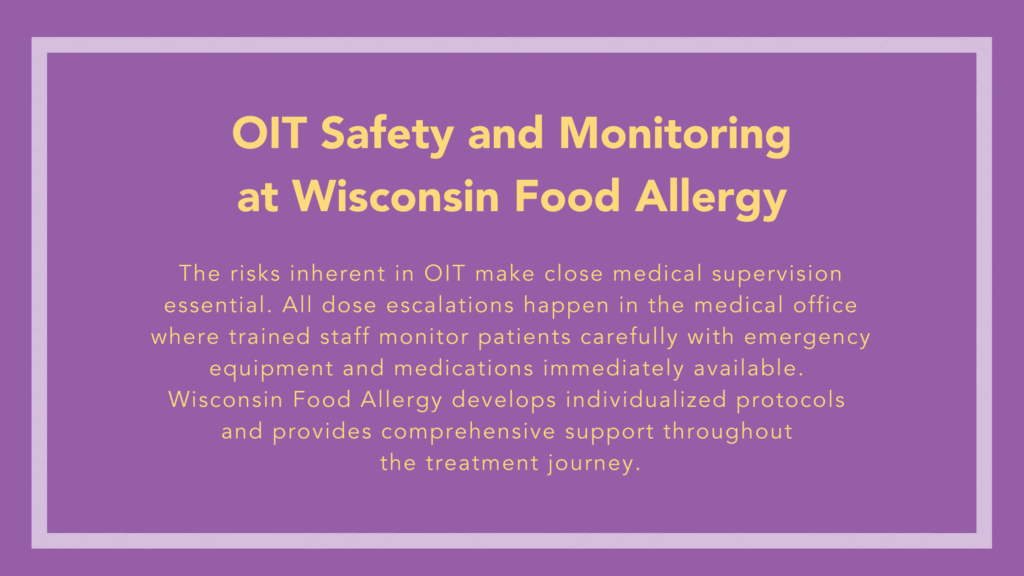
The risks inherent in OIT make close medical supervision essential. Wisconsin allergy practices offering OIT implement comprehensive safety protocols to minimize risks and respond effectively when reactions occur.
All dose escalations—both the initial dosing and each up-dosing appointment—happen in the medical office where trained staff monitor patients carefully. Vital signs may be checked before and after doses. Patients are observed for at least 1-2 hours after each increased dose, allowing symptoms to be detected and treated promptly if they develop.
Emergency equipment and medications remain immediately available during all in-office dosing. This includes epinephrine for severe reactions, antihistamines for mild to moderate symptoms, beta-agonist inhalers for respiratory symptoms, and equipment for oxygen administration or other supportive care if needed. Staff are trained in recognizing allergic reactions and implementing emergency protocols.
Between office visits, families maintain close communication with the allergy practice. Most programs provide direct access to nursing staff or on-call physicians for questions or concerns. Families receive detailed written protocols for managing symptoms at home, including guidance on when to use medications, when to hold doses, and when to seek emergency care.
Patients in OIT programs must have epinephrine auto-injectors available at all times, just as they did before treatment. While the goal of OIT is to reduce reaction risk, the possibility of reactions remains throughout treatment, making continued preparedness essential. Wisconsin families are instructed to carry auto-injectors and know how to use them, and to seek emergency care whenever epinephrine is administered.
The close monitoring and support provided by experienced allergy practices significantly enhances OIT safety. The risks are real but are managed through careful patient selection, gradual dose escalation, monitoring protocols, and immediate access to medical care when needed.
How OIT Is Conducted at Wisconsin Food Allergy
Wisconsin families considering OIT benefit from seeking practices with specific expertise in this specialized treatment approach. Wisconsin Food Allergy offers comprehensive immunotherapy programs designed around individual patient needs and circumstances.
Personalized plan
OIT is not a one-size-fits-all treatment. Wisconsin Food Allergy develops individualized protocols based on each patient’s specific allergen, severity of allergy, age, medical history, and family circumstances. This personalization begins with comprehensive evaluation to determine whether a patient is an appropriate OIT candidate.
The evaluation includes detailed allergy history, review of previous reactions, current testing (skin prick tests or specific IgE blood tests), and assessment of other medical conditions particularly asthma control. Psychological readiness and family support systems are also evaluated, as these factors significantly impact treatment success.
For patients deemed appropriate candidates, the practice designs a specific treatment protocol. This includes starting dose determination, planned escalation schedule, target maintenance dose, and monitoring frequency. While following evidence-based frameworks, the protocol allows flexibility to adjust pacing based on individual tolerance and response.
Wisconsin Food Allergy provides comprehensive education before starting OIT. Families learn about the treatment rationale, expected timeline, dosing procedures, activity restrictions, symptom recognition, and management of reactions. Written materials supplement verbal education, and families have opportunities to ask questions and address concerns before committing to treatment.
The practice recognizes that OIT is a significant undertaking requiring sustained commitment over months to years. They work with families to ensure expectations are realistic and that support systems are in place to maintain adherence throughout treatment.
Handling reactions
Despite careful protocols, reactions during OIT are possible and must be managed appropriately. Wisconsin Food Allergy implements comprehensive approaches to reaction management that prioritize patient safety while maintaining treatment progress when appropriate.
During in-office dose escalations, any symptoms that develop receive prompt attention. Mild symptoms like oral itching or mild stomach discomfort may be treated with antihistamines, and the patient is observed until symptoms resolve. If symptoms are more concerning or don’t resolve quickly, additional medications may be given, observation extended, or the dose reduced for the next interval.
For reactions occurring at home, families follow provided protocols that specify when to give antihistamines, when to use epinephrine, when to hold subsequent doses, and when to contact the office. After any reaction requiring treatment, families typically hold their dose and communicate with the practice before resuming. The medical team evaluates what happened and determines appropriate next steps—whether to continue at the same dose, reduce the dose temporarily, or make other protocol adjustments.
If a patient experiences repeated reactions at a particular dose level, the protocol may be adjusted. Options include holding at the current dose longer before increasing, reducing the dose and advancing more gradually, or in some cases pausing treatment temporarily to reassess. The goal is to balance progress with safety and tolerance.
Some patients progress smoothly through OIT with minimal symptoms, while others have more reactions requiring multiple adjustments. Both paths can lead to successful desensitization—the journey simply looks different for each individual. Wisconsin Food Allergy’s experience with varied patient responses helps them navigate challenges while supporting families through the process.
In rare cases where reactions are severe, frequent, or significantly affecting quality of life despite protocol modifications, treatment may need to be discontinued. While disappointing, this decision prioritizes patient safety and wellbeing. Not every patient successfully completes OIT, and recognizing when treatment isn’t working is part of responsible medical management.
Closing Notes
Oral immunotherapy represents an exciting advancement in food allergy management, offering hope to families who have lived with the constant vigilance and anxiety that food allergies demand. For appropriately selected patients treated under close medical supervision, OIT can provide meaningful protection against accidental exposures and potentially expand dietary freedom.
However, OIT isn’t right for everyone, and it’s not a simple or risk-free treatment. The commitment required—daily dosing for years, activity restrictions, frequent appointments during up-dosing, and vigilance for reactions—is substantial. The risks, while managed through careful protocols, are real and must be weighed against potential benefits for each individual patient.
Wisconsin families considering OIT should seek evaluation from board-certified allergists with specific expertise in immunotherapy. A thorough discussion of candidacy, realistic expectations about outcomes, time commitment required, and potential risks and benefits helps families make informed decisions about whether to pursue this treatment approach.
For those who do undertake OIT, the potential rewards extend beyond biological changes in immune response. The psychological relief of reduced anxiety, the social benefits of fuller participation in food-centered activities, and the practical advantages of increased margin of safety against accidental exposures can be transformative for food-allergic individuals and their families.
Whether oral immunotherapy is right for your family depends on individual circumstances, values, and priorities. Wisconsin Food Allergy and other specialized practices throughout the state stand ready to help families navigate this decision, providing expert evaluation, comprehensive treatment when appropriate, and ongoing support throughout the OIT journey. If you’re living with significant food allergies and wondering whether OIT might help, reach out for a consultation to explore whether this innovative treatment approach could benefit your family.